
Ulnar Tunnel Syndrome
Call (817) 382-6789 to have this looked at, or book online with Dr. Knight.
What is Ulnar Tunnel Syndrome?
The ulnar nerve is one of three nerves that provide motor and sensory function to the arm. The ulnar nerve originates at the brachial plexus running down the length of the arm (near the ulna bone) thru the wrist and into the little finger. It provides sensation to the little finger and half of the ring finger. It also provides motor function of some of the larger muscles in the forearm responsible for grip along with some of the smaller muscles in the hand. As the largest nerve in the body not protected by muscle or bone, the ulnar nerve is prone to injury. Ulnar Tunnel Syndrome happens when the ulnar nerve becomes compressed as it passes thru Guyon’s canal where the wrist meets the palm of the hand. This is not to be confused with Cubital Tunnel Syndrome which occurs with ulnar nerve compression at the elbow.
What causes Ulnar Tunnel Syndrome?
The most common cause of Ulnar Tunnel Syndrome is the presence of a ganglion cyst. This benign (noncancerous) cyst is a soft tissue tumor that originates in the wrist. Repetitive use injuries or overuse can result from using vibrating tools such as a jackhammer and can cause swelling of the tissues around the nerve. Additionally, activities that provide constant palmar pressure such as weightlifting and cycling can cause Ulnar Tunnel Syndrome.

What are the symptoms of Ulnar Tunnel Syndrome?
Symptoms tend to develop gradually over time. Numbness or tingling may be present in the ring and little finger and may be worst in the morning. Increasing weakness may be dependent on the location of compression. With time, grasp and hand dexterity may diminish. Some people also experience pain to the wrist and one or both the ring and little finger.
How is Ulnar Tunnel Syndrome diagnosed?
In addition to a comprehensive medical history, review of symptoms and activity, the physician will perform a physical examination of the affected hand and wrist to determine the site of compression. The doctor may tap their fingers over the ulnar nerve to observe if tingling is caused. This is called Tinel’s test. The practitioner will also be looking for muscle atrophy (wasting), weakness in the hand or fingers and to determine if the cause of symptoms is in the elbow or wrist. X-rays of the wrist can rule-out bone involvement. MRI (magnetic resonance imaging) or CT (computed tomography) scan can rule-out tissue growths that may be exerting pressure on the nerve. Electromyography and nerve conduction studies may also be helpful for a definitive diagnosis.

How is Ulnar Tunnel Syndrome treated?
Non-surgical
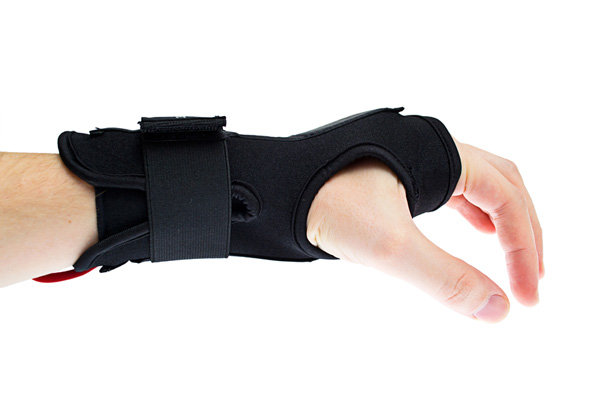
Determining the causative factors leads to the simplest treatment. If the compression is caused by repetitive use or prolonged palmar pressure, the activity in question should be avoided, reduced to a minimum or modified so as not to cause compression. Splinting with a wrist brace may be helpful. Additionally, anti-inflammatory medications such as ibuprofen may help to mitigate symptoms.
Surgical
If all non-surgical interventions fail to alleviate symptoms, outpatient surgery may be performed to release pressure or remove any cysts or scar tissue causing the compression. The ligament the covers Guyon’s canal may be cut to release pressure. As the wrist heals the gap created grows together leaving more room for the ulnar nerve. Post-operatively the symptoms of numbness and tingling should decrease. The nerve will heal completely over the next several months during which time the surgeon will prescribe rehabilitation exercises and physical therapy.
How can Dr. Knight help you with Ulnar Tunnel syndrome?
Ulnar tunnel syndrome can cause debilitating pain, and it is important that this pain be alleviated so that you can go about your daily routine. Dr. Knight is well-trained in the release of these types of injuries, so in his care you will be treated and, hopefully, freed of your affliction in as short a time as possible.
Our offices are easily accessible from Dallas and Dr. Knight is a hand surgeon in Dallas, TX. Come to our Dallas office or Southlake office to see what he can do for you.
Ulnar Tunnel Syndrome Fact Sheet
| How can I come down with Ulnar Tunnel Syndrome? | Ulnar tunnel syndrome is caused by inflammation in the sheath surrounding the ulnar nerve as it passes through the wrist, often in conjunction with the presence of a ganglion cyst. |
| What can I do to try and avoid Ulnar Tunnel Syndrome prior to seeing a doctor? | Cessation of the activities that led to the inflammation of the ulnar tunnel sheath as well as rest, ergonomic shanges, or oral NSAID medications may help alleviate symptoms. |
| Are there any medications I can try that can help stave off Ulnar Tunnel Syndrome or its symptoms? | NSAIDs, or non-steroidal anti inflammatories, are used to reduce the swelling of the ulnar nerve sheath,. |
| Will Ulnar Tunnel Syndorme go away if I leave it alone? | As with many nerve-related conditions, if Ulnar Tunnel Syndrome is left untreated, the affects of the affliction will remain as long as steps aren't taken to mitigate them. |
| What is the surgery for Ulnar Tunnel Syndrome? | Ulnar Tunnel Syndrome is treated with a surgery called Decompression where the ligament that shields the nerve as it passes through Guyon's canal is slived open to relieve the pressure that led to the condition in the first place. |
| How does Dr. Knight recommend treating Ulnar Tunnel Syndrome? | Conservative treatment consists of splinting and ergonomic evaluations of the activities that led to the inflammation, but if these do not succeed then surgery may be necessary to relieve the pressure and other symptoms. |
Frequently Asked Questions:
How serious is Ulnar Nerve entrapment?
Ulnar nerve entrapment is among the more common conditions treated by Dr. Knight, along with Radial Tunnel and Carpal Tunnel Syndromes. All of these conditions involve nerves of the forearm and wrist becoming entrapped, and losing their functionality, often leading to numbness, tingling, or even pain. While not as serious as some traumatic injuries or chronic conditions, the gradual loss of feeling in the hand and arm is never a good thing, and so ulnar nerve entrapment is no laughing matter. If you work with your hands, or your job involves typing or fine manipulation, then it can be quite serious, as it may greatly reduce your ability to engage in these activities as the symptoms increase, and once you can no longer work or engage in hobbies you enjoy, life becomes much harder.
What are the symptoms of Ulnar Tunnel Syndrome?
When the ulnar nerve becomes entrapped, numbness and tingling are the initial symptoms of the condition, and when you first notice these you should seek medical treatment, because the earlier the condition is treated, the less time it will take to take care of and manage the condition. One these symptoms appear, you may also experience weakness and decreased grip in the affected hand or hands. Pain may appear in the little or ring fingers, but this does not affect all sufferers of the condition.
Can Ulnar Tunnel Syndrome go away on its own?
While some nerve-related conditions can heal themselves over time, unless it is treated, ulnar nerve entrapment will continue to be a problem for you as you go forward. Surgery is not always necessary, and conservative treatment will most likely serve to alleviate the symptoms of the condition, but treatment of some kind is necessary in order to have any effect. If untreated, the weakness that is caused by the numbness and tingling will affect your ability to d both your job or any other manual activities that you enjoy.
Do I have to have surgery for Ulnar Tunnel Syndrome?
Dr. Knight espouses an approach to treatment that always starts with conservative, non-surgical treatment. If it all possible , we avoid the unnecessary complication of surgical intervention, and attempt to treat all of your conditions non-invasively. Ulnar Tunnel Syndrome can easily be treated with anti-inflammatories, splinting, rest and icing, but if the condition has progressed prior to your seeking treatment, then other treatments may become necessary.