
Radial Tunnel Syndrome
Call (817) 382-6789 to have this looked at, or book online with Dr. Knight.
Radial tunnel syndrome (RTS) is a condition that causes pain in the forearm and wrist. While it’s a relatively rare condition, RTS can significantly impact those who suffer from it by limiting daily activities and causing persistent discomfort. As it has the potential to interrupt daily life, getting an early diagnosis and effective treatment is essential in terms of restoring function and easing pain. This guide explores what RTS is, how to identify it, and the different radial tunnel syndrome treatment options available.
What is Radial Tunnel Syndrome?
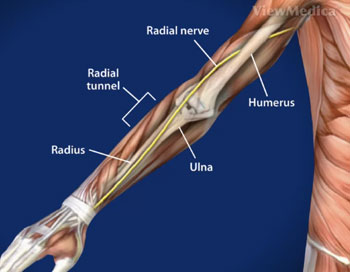
Radial tunnel syndrome (RTS) is a condition that puts pressure on the radial nerve where it passes through the radial tunnel near the elbow and forearm. This pinching compression causes a deep, aching pain in the outside of the forearm and wrist. RTS is not to be confused with carpal tunnel syndrome (CTS). CTS affects the median nerve and causes numbness or tingling in the hand, whereas RTS puts pressure on the radial nerve further up the arm and causes pain in the forearm and wrist.
Recognizing Radial Tunnel Syndrome Symptoms
The main symptom of RTS is a deep, aching pain in the outside of the forearm. It sometimes radiates out toward the wrist and hand. Patients may experience:
- Tenderness or sensitivity at the elbow
- Pain that gets worse when you use your forearm or extend your wrist
- Weakness in the wrist or fingers
- Occasional numbness or tingling (sensory loss is unusual)
Symptoms often look similar to other conditions like lateral epicondylitis (“tennis elbow”), which can make it tricky to identify at first.

Causes of Radial Tunnel Syndrome
RTS is typically caused by sustained or repetitive movements that compress the radial nerve, such as:
- Repeated wrist and forearm movements, like twisting or turning (common in manual labor, sports, or typing)
- A direct hit or long-lasting pressure on the elbow
- Body structure differences that make the nerve easier to compress
- Swelling or inflammation in the area around the nerve
Modern Diagnostic Approaches
An accurate diagnosis involves assessing a patient’s history and using physical tests that target the radial nerve. Healthcare providers focus on working out where the pain or weakness is, using specific arm and wrist movements against resistance. Specific tests include the “middle finger test” and “radial tunnel compression test.” These help provoke symptoms by pressing on or moving the radial nerve.
The team may use imaging such as MRI or ultrasound to rule out other causes. At the same time, traditional nerve conduction studies and electromyography can sometimes aid diagnosis. They often show normal results for RTS because it’s so subtle. More recent clinical methods, including manual muscle testing and the sensory-collapse test, are more effective ways to detect nerve compression by looking at muscle strength, sensory response, and pain.
Treatment Options for RTS
At The Hand and Wrist Institute, we offer various treatments and can tailor them depending on the severity of your symptoms:
Conservative Care
Most patients start off with non-surgical options, as a blend of activity modification and anti-inflammatory medication is considered the initial management approach for RTS. This includes rest, avoiding any aggravating activities, and taking anti-inflammatory medications (NSAIDs) for pain relief. Physical therapy that focuses on nerve gliding exercises can also help.
Splinting and Bracing
We may recommend a splint or brace, as this helps protect the area and reduce nerve irritation. A wrist splint positioned at around 15 degrees helps limit motion that could otherwise aggravate the nerve. Patients can wear Velcro wrist splints at night or during activities that cause symptoms, such as repetitive or resistive movements. They usually need to wear them for four to six weeks, but this can be gradually reduced as symptoms improve.
If a prefabricated splint does not fit comfortably or provide relief, we may create a custom orthoplast splint. In some cases, we may use an elbow splint holding the arm at a 90-degree angle with the forearm supinated (palm up) and wrist in a neutral position, especially for activities or rest periods to reduce nerve irritation even more.
Advanced Therapies
Ultrasound therapy and corticosteroid injections may be considered for persistent symptoms. Ultrasound therapy uses sound waves to heal tissue, reduce inflammation, and improve nerve regeneration, which can help ease pain and improve function. Recent studies show that ultrasound-guided techniques, like hydrodissection, can provide lasting relief by separating the nerve from surrounding tissues, sometimes avoiding the need for surgery. Corticosteroid injections provide powerful anti-inflammatory medicine directly to the nerve area, reducing swelling and discomfort when other treatments haven’t been effective.
Surgical Intervention
Surgery is generally a last resort for patients whose symptoms do not improve with conservative treatment after several months. Surgical decompression is a minimally invasive outpatient procedure that involves cutting the muscles or tissue compressing the nerve to release the pressure. Recovery after the decompression can take several months. Dr. Knight works through the conservative steps with you first, and he will say plainly when he thinks an operation is the right next move.

Recovery and Rehabilitation Guidelines
Recovery depends on the treatment and each case’s specific factors. After surgery, patients will go through rehabilitation that includes physical therapy like gradual stretching, strengthening exercises, and modifying activities to prevent recurrence. Regular follow-ups help monitor nerve function and manage symptoms. Recovery times vary, but most patients get full function back with the right care.
Prevention and Lifestyle Modifications
Preventing RTS is about being proactive.
- Avoid repetitive motions whenever you can.
- Use ergonomic tools and workstations to ease strain on the elbow.
- Maintain good posture and forearm positioning during activities while typing or doing other things
- Strengthen your forearm muscles and try some nerve gliding exercises.
- Seeing a specialist when you first start noticing symptoms may prevent chronic nerve damage.
Make an Appointment with The Hand and Wrist Institute
The Hand and Wrist Institute has over 25 years of expertise and the latest technology to provide exceptional care for radial tunnel syndrome. Our compassionate team creates personalized treatment plans to relieve pain and restore function so you can return to your everyday activities. If you are experiencing forearm pain or suspect you may have RTS, don’t wait. Schedule a consultation today and take the first step toward lasting relief.
Radial Tunnel Syndrome Fact Sheet
| What are the most common factors that lead to Radial Tunnel Syndrome? | Most often, repetitive motion leads to the inflammation of the radial tunnel, which then creates friction on the radial nerve, and leads to the symptoms of the condition. This can be the result of work activities such as typing or other intense use of the hands and wrists, such as sports or hobbies. |
| How can I avoid getting Radial Tunnel Syndrome or lessen the symptoms once it starts? | Cutting down on the actions that have led to the development of the condition is the primary method of self-treatment of Radial Tunnel Syndrome. Avoiding pulling, pushing, manipulation, grasping, and twisting are very important parts of this kind of treatment. rest and icing are also effective methods of reducing the inflammation of the radial tunnel. |
| Are there medications I can take? | Anti-inflammatory medications are important for reducing the swelling that typifies the condition and reducing stress on the radial nerve. In later stages, pain relief may be necessary depending on the type of pain developed in the extremity. |
| How long am I going to have Radial Tunnel Syndrome? Can it be cured? | If left untreated and no modification in activity is undertaken, then Radial Tunnel Syndrome will continue to develop. This will lead to a more significant deterioration of sensation and use of the limb, reducing productivity and your ability to engage in daily activities. |
| What are the most effective ways to treat Radial Tunnel Syndrome? | Physical therapy, oral NSAIDs, and ergonomic modification are the most commonly used conservative treatments. Failing these, surgery can open up the radial tunnel in a procedure known as decompression, relieving the nerve’s pressure. |
Frequently Asked Questions:
How long does Radial Tunnel Syndrome last?
This is a difficult question because many factors come into play when discussing the length of time that a nerve condition like Radial Tunnel Syndrome might last. If treated early and appropriately, the symptoms can be alleviated, and further complications can be avoided. Still, usually, by the time someone notices the pain associated with the condition, it has progressed enough that medical intervention is necessary. With conservative treatment, the symptoms of the condition can be lessened. Still, you must maintain these activities to keep the condition from worsening. If they do not prove effective, surgery may be necessary, which has a different recovery time.
What happens if my Radial Tunnel Syndrome goes untreated?
As a nerve-related condition, Radial Tunnel Syndrome can cause great pain, and so if it is untreated, this pain will increase. Swelling and numbness are also symptoms that will make it difficult to use your arm in daily activities, and the longer they go untreated, the harder it will be to get things done. As soon as you think you may be suffering from Radial Tunnel Syndrome, it is important to seek treatment to avoid this eventuality.
Do I need surgery to get rid of Radial Tunnel Syndrome?
Dr. Knight always prefers conservative treatment before resulting in surgery. Still, in cases where conservative treatment proves ineffective, surgery might be necessary to give you the relief you need and return the functionalist to the affected area. Surgery is a relatively simple procedure known as decompression, where the Radial Tunnel is incised to relieve pressure on the nerve. After a two-month recovery period with therapy, you should be free of pain and able to return to daily activities.
Is Radial Tunnel Syndrome painful?
Yes. Radial Tunnel syndrome involves the radial nerve, and any condition that affects the nerves will have sensory symptoms, which include pain. They may also include tingling and numbness, but the pain will be the most noticeable of the symptoms.
Videos
Animated Videos

Our medical animations open in the practice's own animation player, in a new tab. They are not loaded into this page.
Surgical Videos

This clip is age restricted on YouTube, so it cannot play here. Watching it needs a signed-in YouTube account.

This clip is age restricted on YouTube, so it cannot play here. Watching it needs a signed-in YouTube account.
Note: The following videos contain graphic images.