
Advances in Surgical Treatments for Radial Nerve Palsy
In short
Innovation in recent years has dramatically improved the outcomes for many people with radial nerve palsy.
Call (817) 382-6789 to have this looked at, or book online with Dr. Knight.
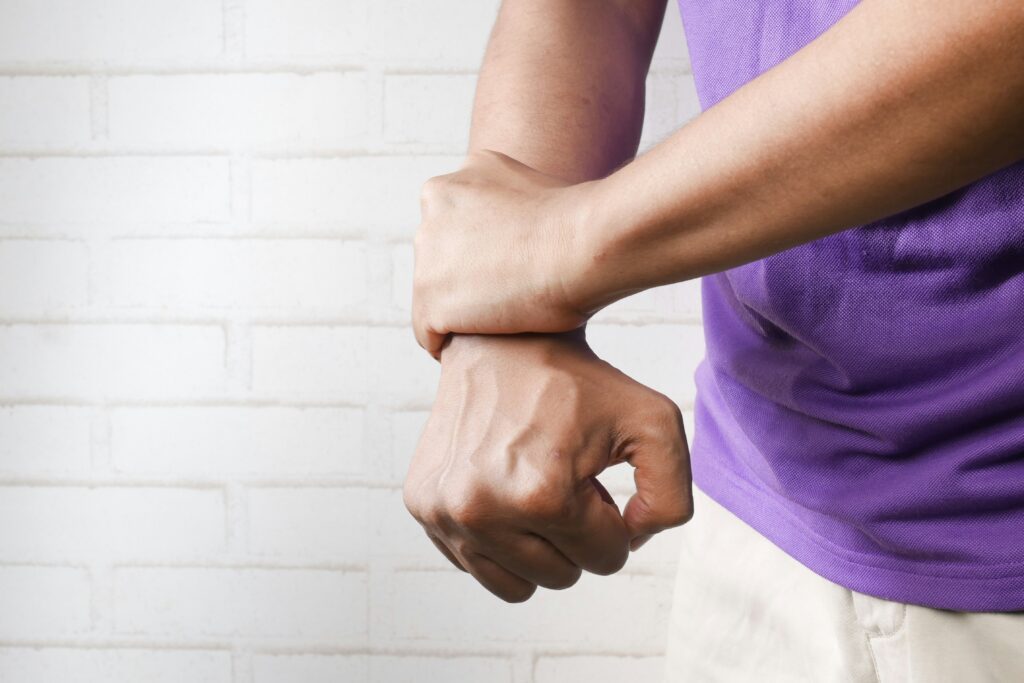
Image via Towfiqu Barbhuiya, used with Unsplash License
The radial nerve originates in your armpit, winds around the humerus bone in your upper arm, and travels into the hand. It has both motor and sensory functions, meaning it plays a role in both directing movements and receiving sensory input. Specifically, the motor functions of the radial nerve include straightening the elbow and extending the wrist and fingers. The sensory map reflects the path it takes down the arm, and it relays sensations felt on the back of the upper arm and the top of the lower arm and hand.
If the radial nerve is injured or compressed, movement and sensation in the areas that are innervated by that part of the nerve will be impaired. This impairment is known as radial nerve palsy, and it’s characterized by the loss of ability to extend your wrist and fingers, a symptom called “wrist drop.” Whether caused by trauma, prolonged compression, humeral shaft fractures, or other underlying conditions, radial nerve palsy can significantly impact the ability to perform everyday tasks.
Surgical and Non-Surgical Treatment Options
Not all radial nerve injuries are alike, and a careful assessment by a specialist is required to determine the most appropriate course of action. In most cases, non-surgical treatment is the first-line approach, and many patients gain full recovery after 3 to 4 months of conservative management. Non-surgical treatment options for radial nerve palsy include:
- Wrist (“cock-up”) splints
- Non-steroidal anti-inflammatory medications (NSAIDs)
- Corticosteroid injections
- Occupational therapy
There are cases where surgical intervention is required, open fractures with nerve laceration, cases where a tumor or bone fragment is compressing the nerve, and cases that haven’t responded to conservative care within a certain timeframe are all indications for operative treatment. When surgery is necessary, several well-established procedures are available, each suited to different injury types and patient profiles:
- Nerve exploration and decompression: Surgical release of compression caused by scar tissue, bone fragments, or other structures.
- Primary nerve repair: If caught early enough, a lacerated nerve can be sutured back together as long as there is no tension put onto the nerve.
- Nerve grafting: In cases where nerve endings can’t be directly reattached, donor nerve (often taken from the sural nerve of the lower leg) is used to bridge the gap.
- Tendon transfer: Sometimes nerve regeneration is not possible or practical, and in these cases, functional muscles are surgically rerouted to compensate for lost movement.
- Neurolysis: The surgical freeing of the nerve from surrounding scar tissue to restore signal conduction.
It’s worth noting that spontaneous recovery rates for primary radial nerve palsy associated with closed humeral shaft fractures are reported at 85% or higher when managed appropriately, underscoring the importance of individualized assessment rather than a one-size-fits-all approach.
Advances in Radial Nerve Palsy Treatment
Injuries to peripheral nerves, including the radial nerve, have historically been challenging to treat. Luckily, remarkable innovation in recent years has dramatically improved the outcomes for many people with radial nerve palsy. Among the techniques that show therapeutic promise:
-
Low-frequency pulse electrical stimulation: Application of a 1 to 10 Hz electrical pulse to the injured area has been shown to stimulate nerve regeneration.
-
Ultrasound-guided hydrodissection: Guided by high-resolution ultrasound, a fluid is injected into the space surrounding the nerve, insulating it from physical contact with surrounding tissues.
-
Low-level laser therapy: Also known as cold laser therapy, this method applies red and near-infrared light to the affected area, triggering the body’s natural tissue repair mechanisms.
-
Platelet-rich plasma: This biologically based treatment concentrates platelets from the patient’s own blood and injects them back into the injured area, stimulating repair.
-
Nerve transfers: This surgical technique reroutes a healthy nerve so it can compensate for the damaged radial nerve, restoring lost movement and sensation. Nerve transfers require increased healing time compared to traditional tendon transfers, but outcomes are consistently improved.
Recovery Times for Different Treatments
One of the most important conversations our team has with patients is setting realistic and hopeful expectations around recovery. The timeline for regaining function following radial nerve palsy depends on several factors: the severity and location of the nerve injury, the type of treatment selected, and how soon intervention is initiated.
Mild compressive nerve injuries, like the classic “Saturday night palsy” that you might get when you fall asleep on your arm, typically begin to improve within a few weeks. More severe compression injuries, like those caused by improper use of crutches or prolonged constriction of the arm or wrist, may take several months before function is fully restored.
In severe cases of compression or entrapment (where the radial nerve becomes pinched between neighboring bone and muscle), minimally invasive surgical procedures may be required, necessitating a longer recovery timeline. For example, it may take 6 to 12 months to achieve full recovery after neurolysis or minimally invasive nerve grafting.
Surgical interventions like tendon and nerve transfers have the longest recovery timelines. For tendon transfer patients, functional improvement is generally experienced more rapidly than with nerve reconstruction, since the transferred muscles are already functioning. However, progressive improvement is gained over months of post-operative rehabilitation, including structured physical and occupational therapy, and full recovery is likely to require 12 or more months.
When nerve transfers are performed, early signs of reinnervation, such as a return of voluntary contraction in the target muscles, are typically detectable around 6 months post-surgery, with full functional recovery continuing to develop over 12 to 24 months. Importantly, the timing of the nerve transfer is critical: research indicates that surgical nerve repair should be performed within 6 months of injury for optimal outcomes. This is particularly relevant for radial nerve palsy patients with closed injuries, as they may choose to put off surgery if a wrist brace gives them sufficient freedom.
Make an Appointment With The Hand and Wrist Institute
If you or a loved one is experiencing symptoms of radial nerve palsy, including wrist drop, weakness in the fingers or thumb, or reduced grip strength, we want you to know that expert care and meaningful recovery are within reach. At The Hand and Wrist Institute, our experienced team combines advanced diagnostic capabilities with the latest surgical and non-surgical techniques to develop a personalized treatment plan that fits your unique needs and goals.
For over 25 years, we have been honored to serve the patients of the Dallas-Fort Worth area with the highest standard of orthopedic hand and wrist care. Our commitment to innovation, compassion, and patient-centered outcomes means that every person who walks through our doors receives attentive, individualized attention from a team that genuinely cares about restoring what matters most, your independence, your comfort, and your quality of life.
Don’t wait to seek the care you deserve. Contact The Hand and Wrist Institute today to schedule a consultation and take the first step toward recovery.