
Bowling And Wrist Tendonitis
In short
Learn more about the possible connection between bowling and wrist tendonitis, and what you can do to help relieve the pain.
Call (817) 382-6789 to have this looked at, or book online with Dr. Knight.
Bowling and Wrist Tendonitis
The wrist is a delicate hinge joint that comprises several important tissues. The wrist consists of distal bones of the forearm: ulna and radius, the bones of the wrist or carpals, proximal metacarpals, muscles, synovial fluid-filled sheath, ligaments, blood vessels, nerves, and tendons. The wrist is important for the highly functional role that the hand plays in everyday activities. An acute or a chronic injury to the wrist will have a significant impact on an individual’s performance and may lead to temporary or permanent disability.
Wrist tendons are very strong and dense fibers. The tendons of the wrist join the muscles and bones of the hand. This connection is vital for transferring the energy of the muscles to moving the bones of the hand. There are two groups of tendons in the wrist: flexor tendons and extensor tendons.
Flexor tendons are located on the volar (or palmar) side of the hand. These tendons are important in bending the wrist forward and also aid in rotating the wrist. The extensor tendons are found on the dorsal (or back) side of the hand. They facilitate the bending of the wrist backward.
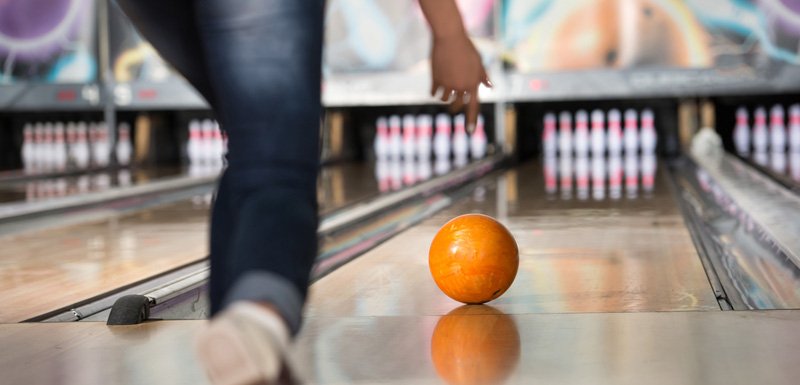
Bowlers often have to throw a 16-pound ball using different spinning techniques that put unbalanced forces on the hand and wrist. Bowling too many times and too rapidly can magnify the occurrence of wrist tendonitis. Common bowling related injuries are elbow tendonitis, shoulder tendonitis, herniated disc, anterior and posterior ligament (ACL & PCL) tear, etc.
Risk Factors and Causes of Bowling and Wrist Tendonitis
Bowling and wrist injuries can be exacerbated in individuals who are involved in repetitive activities. These activities put a lot of stress on the wrists and other parts of the upper extremities including the elbow, shoulder joints, knee, hip, and back.
Risk factors that increase wrist injuries are age-related alterations in connective tissues – such as tissue elasticity, blood flow, etc. Pre-existing conditions such as osteoarthritis or rheumatoid arthritis, diabetes, thyroid diseases, etc can exacerbate the development of tendonitis.
Wrist tendonitis is the inflammation of one of the tendons of the wrist. Inflammation occurs when the tendons become irritated, and in some cases, tendonitis is due to micro-tears in the tendon. Irritation of the tendons can arise from repetitive wrist motion (repetitive strain injury (RSI)), wear and tear, and everyday activities.
Although wrist tendonitis can occur in any individual, certain wrist tendonitis is most common among professional athletes. Pro-golfers, tennis players, rowers, pro-bowlers, etc. are some of the professionals who suffer wrist tendonitis.
Symptoms of Bowling and Wrist Tendonitis
Common symptoms of bowling and wrist tendonitis are classical symptoms of inflammation: pain, redness, swelling, tenderness, etc. Other symptoms are a reduced range of motion (ROM), difficulty performing daily activities, numbness or tingling sensation in the hands, fingers, and/or forearm, nerve irritation due to swelling of the tendons, muscle fatigue, soreness, and popping/ tearing sensation (crepitus).
However, the symptoms of tendonitis that the patient experience depends on the severity of the injury. It is vital that patients consult a medical doctor or visit an emergency center immediately they suffer an injury. If left unattended, chronic tendonitis can lead to tendinosis – a complicated, non-inflammatory degeneration of the tendons.
How to Diagnose Bowling and Wrist Tendonitis?
Wrist injuries diagnosis is complex. When a wrist injury is suspected, patients are advised to consult a primary care physician. The physician will take conduct a thorough medical history, perform a physical examination of the hand (and wrist). Depending on the severity of the injury, the physician can refer the patient to a hand specialist: hand and wrist surgeons or sport medicine specialists.
For serious hand injuries, imaging tests such as x-rays, MRI, and ultrasound are performed to accurately diagnose hand wrist injuries. Different hand injuries will require different combinations of imaging and clinical tests. For bowling related injuries, MRI and ultrasound images are sufficient for an accurate diagnosis.
How to Treat Bowling and Wrist Tendonitis?
Once wrist tendonitis has been correctly diagnosed, the patient is advised to avoid the activities that caused the injury. Rest is important for facilitating healing of the tendons. Wrist immobilization using a brace or a splint, and icing the hand to reduce inflammation. Prescription drugs like corticosteroids injections and NSAIDs (Non-Steroidal Anti-Inflammatory Drugs) over-the-counter (OTC) medication are administered to reduce pain.
For more serious bowling and wrist tendonitis, particularly those involving tendon microtears, surgical intervention may be needed to repair the tendon and surrounding connective tissues and bones.
Bowling and Wrist Tendonitis Management and Rehabilitation
Following successful diagnosis and treatment of bowling and wrist tendonitis, it is vital to properly manage the hand and wrist to ensure proper healing. Most non-surgically treated wrist tendonitis, treatment usually lasts up to three weeks. For surgically treated tendonitis, treatment typically requires longer periods (6 -12 weeks).
Hand massage and strengthening exercises can improve wound healing by increasing the range of motion of the wrist. These therapeutic exercises such as wrist flexion and extension strengthen the wrist and affected muscles.
After full recovery from wrist tendonitis, patients should take precautions when performing repetitive activities to prevent the reoccurrence of the injury. Bowlers are advised to warm up lightly to improve blood circulation and to lubricate the joints. Professional bowlers should wear wrist guards and use good bowling technique. Because of the weight of the bowling ball, bowlers are encouraged to do hand strengthening exercises to build strong hand muscles and stable joints.
Citations
- Brooks Ficke, MD. “Diagnosing Wrist Tendonitis.” Sports-health, 4 Apr. 2019, www.sports-health.com/sports-injuries/hand-and-wrist-injuries/diagnosing-wrist-tendonitis.
- Gregory, Peter L., et al. “Comparing Injuries of Spin Bowling with Fast Bowling in Young Cricketers.” Clinical Journal of Sport Medicine, vol. 12, no. 2, 2002, pp. 107-112.
- “Wrist Tendinitis.” Twin Boro Physical Therapy, 8 Nov. 2011, twinboro.com/body/hand/conditions/wrist-tendinitis-nj.html.