
Preventing Hand and Wrist Injuries in the Gym
In short
Many overextension injuries are the result of improper form when lifting. Follow these tips to help avoid serious injury at the gym.
Call (817) 382-6789 to have this looked at, or book online with Dr. Knight.
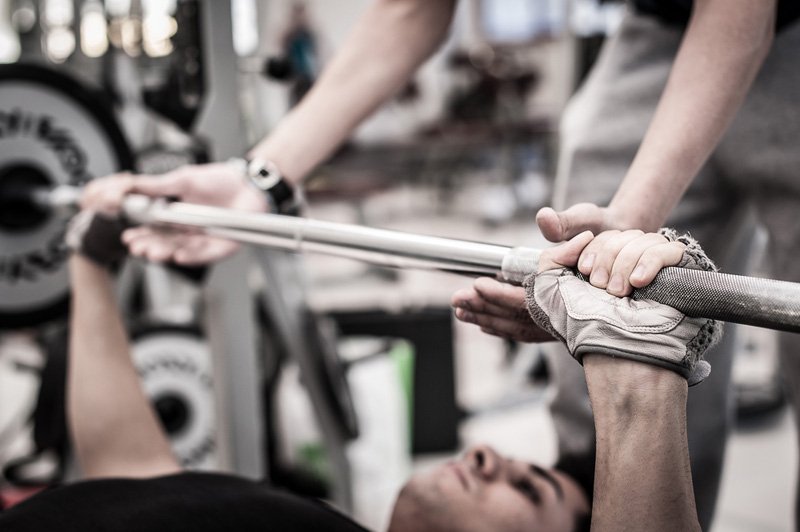 As February winds down, many New Year’s resolutions have deteriorated or been abandoned altogether. For many, this comes as a result of overtraining or injury, sometimes to the hand or wrist. Fortunately, many of these injuries are minor, and can be easily prevented or treated at home.
Background and Common Injuries
Without a doubt, the gym is riddled with potential hazards to the hand and wrist. Falling on the wrist, having a body part crushed by weight, awkwardly moving weight, and even repetitive activity can all cause pain.
The American Orthopaedic Society for Sports Medicine lists fractures, dislocations, tears of the ligaments or tendons, and tendonitis as hand and wrist injuries associated with sports. But which are the most common? According to a 2017 study by the Journal of Orthopaedics, strains and sprains make up nearly half of all weight training injuries. While both of these are caused by an overextension of the joint (either acute or over time), the former involves injury to a muscle or tendon (fibrous tissue that connects muscles to bones) and the latter involves injury to a ligament (fibrous tissue that connects bones to bones).
Many exercises can cause these injuries, with push-ups, bicep curls, bench or shoulder presses, and lateral raises being among the most common. In other words, any motion that involves bending the wrist, or may lead to a bent wrist, is a higher risk movement.
Fortunately, the overlapping causes of these injuries allows many to be prevented with the same techniques. If you are already injured, the best place to start treatment is with rest, ice, compression, elevation, and over-the counter medications. While resting, it is best to avoid any movement that may aggravate the injury. If any joints are misaligned, movement is significantly restricted, or serious pain lasts for longer than a couple days, you should see a doctor.
Hand and Wrist-specific Prevention Techniques
Use proper form: Keep the wrist straight when possible
Many overextension injuries are the result of improper form when lifting. To minimize the amount of isolated stress placed on the wrist, one should focus on keeping it as straight as possible. In the case of push-ups, this would mean using push-up bars or doing push-ups on your knuckles. For bicep curls, the wrist should remain locked in position for the entire curl; any bending at the wrist might signal that you are using too much weight. Other exercises involving a press (bench, shoulder, incline) have inherently more wrist bend, though firmly grasping the bar lower down in the palm can prevent the wrist from bending backward too far.
Do not use too much weight
As with any lift in the gym, do not overload yourself. Even those with the best form can be forced into painful and risky positions by an improper amount of weight. This can also be applied to bodyweight exercises – e.g., doing push-ups from your knees or with your hands on an incline to reduce the amount of body weight you are pressing up.
Strengthen the muscles around the wrist
Holding a light amount of weight and performing a wrist curl or reverse wrist curl can help build strength in the forearms:
- Grasp the dumbbell and rest forearm on thigh with wrist just beyond knee and palm up.
- Allow the dumbbell to roll out to your fingers, bending the wrist backward.
- Raise the dumbbell back up.
The reverse version of a wrist curl is performed with the palm facing down.
A hand grip exercise is also an easy to improve wrist strength. Simply squeeze a tennis ball (or other, similarly resistive ball) for 3-5 seconds, with a short break between. All exercises should be repeated 10-15 times.
Wear a brace
The wrist can be braced with either athletic tape or a reusable wrist brace. In addition to adding strength and support to the joint, these braces prevent the wrist from overextending in any direction, thereby reducing risk of injury.
Further, they are particularly helpful for exercises in which a degree of wrist bending is unavoidable, such as bench press or push-ups (if you do not want to go onto your knuckles).
Of course, these braces should fit snugly, but not to the point of cutting off circulation. One good way to check this is to squeeze the tip of a finger and see how long it takes for color to return. If it is more than 5 seconds, you will want to loosen the brace.
Stretch before and after working out
Just like any other muscle or joint in the human body, wrists should be warmed up prior to working out and cooled down after. This can be done by lightly manipulating the wrist in different directions with your other hand, as well as by rolling it at different speeds.
General Training Tips
Much of injury prevention for the hand in wrist is generally applicable to all parts of the body. Some of the most important include:
- Multiple studies have linked chronic lack of sleep to increased risk of injury, as it helps the body recover properly after working out.
- Nutrition plays an important role in helping the body recover and therefore, preventing overuse injuries. Central to this is that the body takes in enough calories and protein to repair damaged muscle.
- Take time to rest. Actively incorporating rest into your workout routine not only prevents overuse injuries, but also helps your body lock in the progress it’s made in the gym. Of course, if you are injured, you should avoid any motions that will aggravate the injury; “pushing through” an injury is not helpful.
Citations
- Matthews, D. (2016). Sports Tip: Hand and Wrist Injuries. Retrieved from the American Orthopaedic Society for Sports Medicine; that page is no longer published.
- Wang, R. (November 2018). Advice from a Certified hand Therapist: Exercising With(out) Wrist Pain. Retrieved from assh.org.
- Cinque, M., et al. (November 2017). Upper Extremity Weightlifting Injuries: Diagnosis and Management. Retrieved from researchgate.net.
- Sprains (December 2018). Retrieved from mayoclinic.org.
- Hand Grip Exercise (n.d.). Retrieved from the National Institute on Aging Go4Life programme; that page is no longer published.
- Wrist Curl Exercise (n.d.). Retrieved from the National Institute on Aging Go4Life programme; that page is no longer published.
- Porretto-Loehrke, A. (April 2016). Taping techniques for the wrist. Retrieved from jhandtherapy.org.
- Milewski, M., et al. (March 2014). Chronic Lack of Sleep is Associated With Increased Sports Injuries in Adolescent Athletes. Retrieved from journals.lww.com.
- Kloubec, J. and Harris, C. (March 2016). Whole Foods Nutrition for Enhanced Injury Prevention and Healing. Retrieved from journals.lww.com.