What is De Quervain’s tenosynovitis, or mommy thumb?
On the channel as “De Quervain's (Stenosing Tenosynovitis) Surgery”
In this video Dr. Knight explains De Quervain’s tenosynovitis, the thumb side wrist pain often called mommy thumb. He covers the activities that bring it on, the bracing and injection he tries first, and the release surgery.
This is a transcript of a recorded talk from 2014. Any figures mentioned are from the recording and are not statements about current results or the practice.
Read the transcript 446 words
The transcript below is what Dr. Knight says in the video. We corrected the anatomy, drug and device names the automatic captions got wrong and added the punctuation and paragraph breaks. No words were changed, added or taken out. The uncorrected machine transcript is kept on file.
Transcript
Let's take a look at De Quervain's surgery. De Quervain's tendinitis, or mommy thumb, is a very common condition that affects the hand and wrist. Let's take a look at the activities. Frequent activities such as lifting a heavy baby, computer keyboard and mouse use, and frequent texting. All activities that can affect us day to day can cause this condition from repetitive thumb movement, as you can see here.
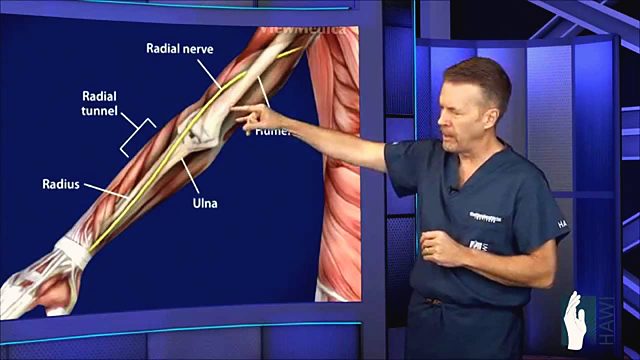
Let's look at the anatomy. The anatomy involves the extensor and abductor of the thumb that pulls the thumb away from the palm. It is from this repetitive movement that can lead to friction within this tight tunnel, or inflammation, that can cause considerable pain.
So how do we treat this? Well, the first thing we're going to do is immobilize the thumb, put it at rest to let this inflammation reduce. We'll add some anti-inflammatory medication such as ibuprofen. Another thing that can be effective if this doesn't work, and that frequently is necessary, is a simple one-time cortisone shot into the sheath to reduce the inflammation.
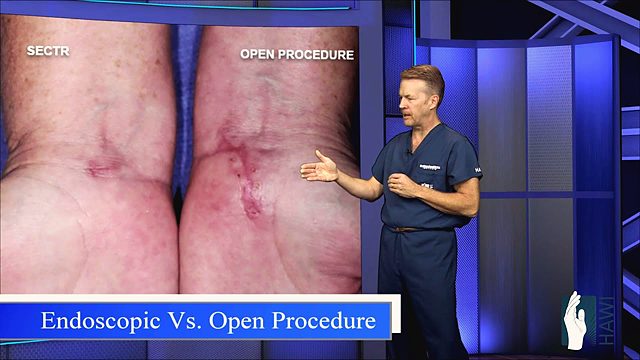
However, in about 50% of cases though, the conservative treatment fails and we have to look at a minimally invasive surgical procedure through a small tiny incision that we're going to make on the thumb side of the wrist. And through that incision, we're going to go in and we're going to open up that sheath, just letting the pressure off. This causes no limitation of function once we do this.
You can see this sheath is open, but in a significant portion of patients, and it's critical the surgeon sees this, there may be two compartments, one around each of the tendons. So it's important to go in and release all these compartments, as you can see, as we're going to open up the final sheath here.
Now let's take a look at this in a real patient. This is a templated surgical site that we're going to cut open, and we're going to open this up. Now we're going to go down. As you can see, this great magnified view right here, the stars are actually the sheath that's been opened up, and you can see the tendons running between this.
Afterwards, we'll put a couple stitches or sutures beneath the skin that subsequently dissolve. We'll put you in a brace that will stay on for about three days. The patient then comes back to the office. We remove the brace and start range of motion right away. Highly effective surgery. Overall recovery time is about four to six weeks to full activity.
For more on this condition and many other conditions, please visit our website.
Related pages
This video is also listed in our informational videos and video gallery.