
What Causes Bone Spurs in Finger Joints?
In short
Learn about bone spurs, including types like Bouchard's and Heberden's nodes, and carpal boss.
Call (817) 382-6789 to have this looked at, or book online with Dr. Knight.
While they may sound ominous, bone spurs often present no symptoms and can go hidden for years until you discover them from a test for an unrelated condition. These bone spurs usually don’t require treatment. Still, some bone spurs, such as those in finger joints, can cause pain and limit joint mobility. Consequently, diagnosing and treating a bone spur in your finger joints is critical to healing your hands as quickly and effectively as possible.
What Are Bone Spurs?
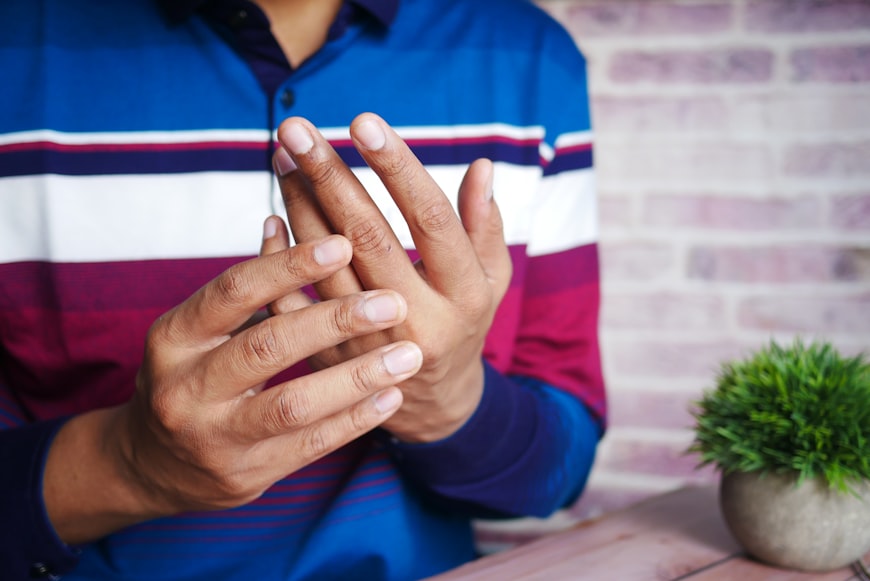
Bone spurs, also called osteophytes, are outgrowths of bone that develop along a bone’s edge over a prolonged period. These lumps of extra bone often occur in joints, where the bones meet. Bone spurs are most common in people 60 years and older. Still, younger people can get them too.
There are primary forms of bone spurs that occur in your hands. These types are:
- Bouchard’s nodes.
- Heberden’s nodes.
- Carpal boss.
Causes of Bone Spurs
Bone spurs in your hands and fingers typically develop due to an injury or medical condition such as osteoarthritis. An injury or condition such as osteoarthritis can wear away the cartilage in your joints that protect your bones.
Those lacking proper amounts of cartilage in their fingers will experience irritation and inflammation from increased friction as their bones rub against each other. Your body can attempt to repair the resulting joint damage by producing bone growth to try and protect your joints. This repair attempt leads to bone growth, which can be painful and reduce hand mobility.
Symptoms of Bone Spurs
As previously stated, many bone spurs aren’t visible and have no symptoms. These spurs begin to cause symptoms when they:
- Pressure nearby nerves.
- Restrict movement.
- Rub against other bones or tissues.
When any of these occur, typical symptoms include:
- Pain in or near the affected joint.
- Stiffness when moving the affected joint.
- Weakness or numbness in the affected area.
- Knobs or bumps.
- Reduced range of motion.
- Tendonitis, which is swelling or inflammation of a nearby tendon.
- Muscle spasms or cramps.
Bouchard’s Nodes
Bouchard’s nodes are bony enlargements of the middle joints of your fingers, also called the proximal interphalangeal joints, which are the joints closest to your knuckles. Like other bone spurs, Bouchard’s nodes can be painful, though they aren’t always. Conversely, even if they don’t cause you pain, they will typically limit your fingers’ mobility or range of motion.
These nodes can cause your bones to become misaligned and crooked, resulting in swollen fingers. Your grip strength can also weaken as your finger stiffens due to a Bouchard’s node. This stiffness can make it difficult to complete everyday tasks, such as turning a doorknob or using a can opener.
Genetics likely play a significant role in Bouchard’s nodes, as health care providers often see them occur throughout a family. In addition, these nodes are more likely to affect women than men. Still, the primary cause of Bouchard’s nodes is the long-term wear and tear of joint tissues, such as in osteoarthritis, and can affect anyone.
Treating Bouchard’s Nodes
Treatment for Bouchard’s nodes includes:
- Resting the affected hand.
- Heat and ice therapy.
- Medicine, such as pain relievers or nonsteroidal anti-inflammatory drugs (NSAIDs).
- Topical capsaicin cream, lidocaine, or NSAID cream.
- Physical or occupational therapy.
Surgical treatment for Bouchard’s nodes is rare, and individuals primarily undergo it for cosmetic purposes.
Heberden’s Nodes
Heberden’s nodes are small bony growths on the joint closest to your fingertip, called the distal interphalangeal joint. Like Bouchard’s nodes, Heberden’s nodes may or may not be painful. Whether they cause you pain depends primarily on the state of growth the nodes are in. For example, while they are developing, you may experience pain. Once fully formed, the nodes typically won’t hurt or won’t hurt as much.
Like Bouchard’s nodes, Heberden’s nodes are more common in women than men. Usually, these nodes form on the index finger of your dominant hand, and this type of hand bone spur may also grow to the side of your finger rather than straight upward. Heberden’s nodes are typically a strong indicator of hand osteoarthritis.
Treatment for Heberden’s Nodes
Treatment for Heberden’s nodes includes the following interventions:
- Low-level laser therapy.
- Rest.
- Splinting.
- NSAIDs like Advil (ibuprofen) or Alleve (naproxen).
- Heat and ice therapy.
- Physical or occupational therapy.
In cases where these treatments aren’t effective, your health care provider may recommend surgery. This surgery may include replacing the affected joint or removing the inflamed parts of the joint and putting it back together, called a joint fusion.
Carpal Boss
A carpal boss is a bone spur on the back of your hand, usually where the long hand bones meet the small wrist bones, called the metacarpal bones. You may not realize you have a carpal boss until you hit the back of your wrist against something else, which can irritate the carpal boss. A carpal boss may also irritate the tendons on the back of your hand, and you may experience these tendons snapping as they move over the bump.
Treating a Carpal Boss
Treatment for a carpal boss includes:
- Monitoring without any specific intervention.
- Anti-inflammatory analgesics.
- A wrist splint.
- Steroid injections.
When these treatment options don’t stop symptoms, your provider may recommend surgery to remove the excess bone. Typically, this surgery is performed using local or regional anesthetic and is an outpatient procedure, meaning you won’t need to spend the night in a hospital.
Get Your Bone Spurs Treated at the Hand and Wrist Institute
Are your bone spurs causing you pain or discomfort? The experts at the Hand and Wrist Institute can help you return to your normal everyday life. Our team of experienced medical professionals has cared for the Dallas–Fort Worth area for over 25 years.
We combine this experience with our facilities and the latest techniques to help you heal quickly and efficiently. Contact the Hand and Wrist Institute to ask questions and schedule an appointment. You don’t have to live with your bone spurs.