
What Are the Differences Between a Ligament and a Tendon?
In short
Your tendons and ligaments are essential connectors that hold your bones, muscles, and organs together so you can sit, stand, and move effectively. Though strong and powerful, these connective tissues can become injured by anything from a sudden movement to repeated strain. Our team at The Hand and Wrist Institute are experts in tendon and ligament care and treatment in the Dallas-Fort Worth area.
Call (817) 382-6789 to have this looked at, or book online with Dr. Knight.
Your tendons and ligaments are essential connectors that hold your bones, muscles, and organs together so you can sit, stand, and move effectively. Though strong and powerful, these connective tissues can become injured by anything from a sudden movement to repeated strain. Our team at The Hand and Wrist Institute are experts in tendon and ligament care and treatment in the Dallas-Fort Worth area. Read on to discover all you need to know about these vital connectors.
What Are Tendons and Ligaments?
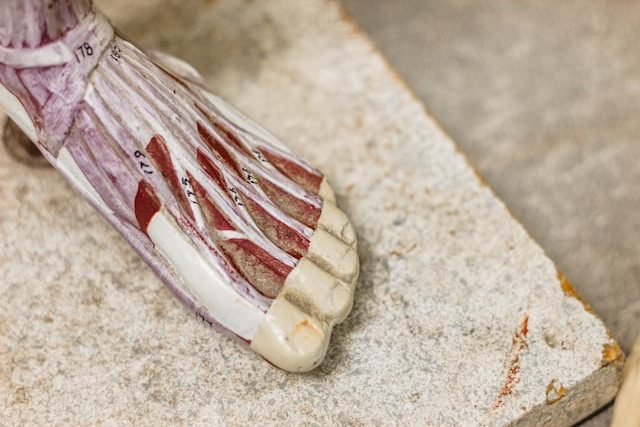
Tendons and ligaments are both soft connective tissues that hold the parts of your body together. Tendons typically connect bone and muscle, although they can also be found in other areas, such as the back of your eyeball. Ligaments usually secure bone to bone, holding your skeleton together and maintaining its form. However, ligaments perform other functions as well, such as holding the uterus within the pelvis and maintaining the position of the stomach, intestines, and liver in the abdominal cavity.
Anatomy of a Tendon
The body has around 4,000 tendons. Tendons are dense tissues primarily composed of collagen fibers. Bundles of collagen fibers are arranged together to create a rope-like structure with incredible strength. The basic anatomy of a tendon includes the following:
• Primary fiber bundles known as subfascicles.
• Secondary fiber bundles called fascicles, which are comprised of groups of subfascicles.
• Tertiary fiber bundles comprised of groups of fascicles, which form the complete tendon.
Tendons have incredible tensile strength, enabling them to transmit muscle forces to the bones and joints and absorb the impact of your movements. When you contract a muscle, the tendon is what pulls on the associated bone, causing movement. While ligaments hold the skeleton together, your tendons are responsible for keeping it upright and enabling it to move. Tendons connect to muscles via musculotendinous junctions and connect to bones at osteotendinous junctions. Your tendons can withstand extreme forces. The flexor tendons in your foot, for example, can bear more than eight times your body weight.
Anatomy of a Ligament
Ligaments, like tendons, are primarily made from collagen fibers. Your body contains around 900 ligaments that help it maintain its form. Ligaments also contain some elastic fibers, which vary in their elasticity depending on their purpose. Most ligaments connect to the outer covering of the bone, known as the periosteum.
Most of the body’s ligaments are found around moveable joints such as the fingers, elbows, shoulders, neck, hips, knees, ankles, and back. Ligaments typically run at different angles to the bone to provide stability and a wide range of motion.
Common Injuries Associated With Tendons
Although your tendons are strong, they’re not very stretchy, so they can tear if you stretch them beyond their capacity. Long, thin tendons can withstand more stretching and allow for precise, delicate movements, such as those of your fingers. Short, wide tendons support more powerful movements, such as those of the triceps and quadriceps. These tendons can handle a greater load but have less elasticity.
When a tendon is torn or overstretched, it’s known as a strain. Such strains most commonly occur in the back, foot, and leg. Your tendons can also suffer from other conditions, such as:
• Tendonitis: Inflammation of the tendons, typically resulting from overuse.
• Tenosynovitis: Tendonitis combined with inflammation of the tendon sheath, usually affecting the hands or feet.
• Tendinosis: A progressive condition that occurs when an injured tendon cannot heal properly.
• Rotator cuff tear: The partial or complete detachment of the tendon from the upper arm bone (known as the humerus).
Common Injuries to Ligaments
When you stretch or tear a ligament, it’s known as a sprain. Sprains occur when the ligament is pulled too far or stretched in the wrong direction. A sudden blow or fall may also result in a sprain. For example, you might tear your wrist ligament if you put your hand out to break a fall. Athletes may also suffer from sprains as a result of excessive strain on a ligament. For example, the overhand throwing motion that’s used in baseball or football can cause the ulnar collateral ligament in the elbow to rupture from overuse.
There are three classifications of sprains:
• Grade 1: The ligament is slightly torn or overstretched. There’s minimal pain and discomfort.
• Grade 2: The ligament is partially torn. You may experience swelling, bruising, and difficulty using the associated part of the body.
• Grade 3: The ligament is completely torn. This rupture makes it impossible to put weight on the area, and you’ll likely experience severe pain, swelling, and bruising.
Sprains are common in the wrist, knee, and ankle. You may notice a popping or snapping sound when you first injure a ligament.
Treating Injured Tendons and Ligaments
You can treat injured tendons and ligaments through a combination of rest, ice, compression, and elevation (also known as the RICE method):
• Rest: Immobilize the injured part of the body as much as possible.
• Ice: Ice the area for 20 minutes at a time using ice wrapped in a cloth or towel.
• Compression: Wrap the injury in a compression bandage to reduce swelling.
• Elevation: Elevate the injured ligament or tendon above your heart to control swelling.
You can also use over-the-counter anti-inflammatory medication to treat pain and swelling, but it’s important to discuss this with a health care provider. If you’re suffering from tendinosis, anti-inflammatory medication might slow the healing process.
Depending on the severity of the injury, you may need to participate in physical therapy exercises to support proper healing and maintain strength, flexibility, and range of motion. In some cases, you may need surgery for an injured tendon or ligament.
Seek Medical Care for Tendons and Ligaments at The Hand and Wrist Institute
Following any suspected sprain or strain, practice the RICE method immediately. In the case of a minor injury, you’ll experience noticeable relief. Seek medical attention if your joints feel unstable, you can’t bear weight on the affected area, or you experience numbness, tingling, severe pain, or significant bruising and swelling that persists for more than a few days. Our team at The Hand and Wrist Institute can diagnose and treat issues with tendons or ligaments in the hand, wrist, or elbow. Schedule an appointmenttoday to find out more.