
Wrist Sprain
Call (817) 382-6789 to have this looked at, or book online with Dr. Knight.

What is a Wrist Sprain?
The wrist is composed of eight floating bones called carpals. These bones are connected by strong, flexible bands of connective tissue known as ligaments. A sprained wrist occurs when any of the ligaments in the wrist are injured. Wrist sprains are quite common and can range in severity. Based on the degree of injury to the ligament, a wrist sprain will be categorized as either Grade 1 for mild sprains (overly stretched), Grade 2 for moderate sprains (partially torn), or Grade 3 for severe sprains (fully torn ligament).
What causes a Wrist Sprain?
Athletes are particularly prone to Wrist Sprain. Gymnastics, skiing, football, and figure skating are just a few of the sports in which this type of injury is common. Wrist Sprains are most frequently caused by a fall on an outstretched hand. This type of fall is also common in icy weather. Additionally, any activity that results in a sudden, forceful impact on the wrist can place undue stress on the ligaments, leading to over-stretching and potentially tearing.
What are the symptoms of a Wrist Sprain?

Symptoms can vary based on the severity and location of the injury. Pain is expected at the time of injury and can persist with movement. Swelling and bruising are also common. Some report a tearing or popping sensation inside the wrist. There may be some loss of function in the affected wrist.
It is crucial to have a doctor evaluate wrist injuries. In some cases, what seems like a mild injury may require surgery to avoid long-lasting pain and stiffness. Proper diagnosis and treatment are crucial to prevent permanent damage.
How is a Wrist Sprain diagnosed?
A complete medical history and a review of occupational and recreational hazards are the first steps in the diagnosis. The physician will perform a thorough physical examination of the affected wrist, hand, and arm. Imaging studies such as X-rays, CT, and/or MRI will be ordered to determine the location and severity of the injury. X-rays will reveal whether or not there are any associated fractures. MRI, CT, and Arthrogram allow the physician to visualize the ligament and the full extent of the damage.
Wrist Sprain Treatments in Dallas
Non-surgical
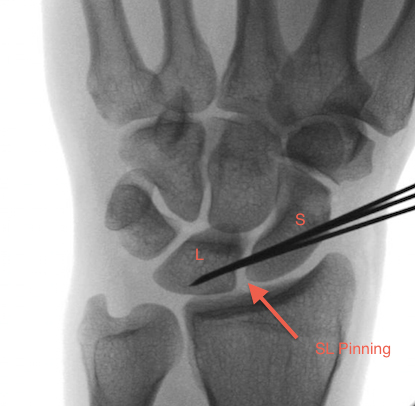
A qualified physician should evaluate all Wrist Sprains since even severe Grade 3 sprains may present with only minor symptoms. Mild Grade 1 sprains are u
sually treated at home. The wrist should be rested for at least 48 hours. Cold packs can be applied for 15 to 20 minutes several times a day to help relieve swelling. Compression with an elastic bandage and elevating the extremity above the level of the heart can also provide relief. Additionally, over-the-counter pain medications such as ibuprofen may be helpful.
Moderate Wrist Sprains will require a longer healing time. These sprains may need to be immobilized in a splint for a week or more. Immobilization can cause stiffness in the joint, so special stretching exercises will be recommended to regain full mobility.
Surgical
Severe sprains in which one or more ligaments are completely torn will likely require surgical repair. The ligament(s) must be reconnected to the bone to restore proper function and joint stability. After a period of immobilization, rehabilitation begins. Wrist therapy will strengthen and restore flexibility to the wrist. While the ligament may heal within 6 to 8 weeks, full recovery may take several months, depending on the severity. Cartilage and Ligament Tears of the Wrist
How can Dr. Knight help you with wrist sprains?
While primarily mild, and seldom requiring surgery to fix, wrist sprains can be tricky and may often have caused much more damage than is apparent. It is important for them to be treated as soon and as comprehensively as possible to avoid any lasting, chronic pain or malformation of the joint. Dr. Knight is a wrist specialist with extensive experience in advanced wrist arthroscopy.
Dr. Knight is excited to be serving residents throughout the Dallas area. He’s a hand and wrist doctor in Dallas, and if anyone can help, he can. Come to our Dallas office or Southlake hand and wrist center at your convenience.
Wrist Sprain Fact Sheet
| What is the difference between a sprain and a strain? | Sprains are specifically injuries that involve the ligaments, or connections between bones, and so can only occur at joints, where strains are injuries involving muscle and tendon attachments, and so have a much wider area of occurrence. Sprains are much more sereious than strains, but neither have the apocalyptic effect of a break. |
| What kinds of tests can be used to see if I have a sprained wrist? | Usually, a sprain can be diagnosed after a thorough history and pysical examination, but sometimes a docotr might order x-rays to determine if there is also any bone involvement. If no fracture is detected then a sprain or straing in indicated. MRI can be effective at discovering tissue ruptures that do not show up on physical palpation. |
| Do I need a cast for a sprained wrist? | Depending on the severity of the injury, a splint or cast my abe usefuland recommended as a way to immobilize the wrist and make sure that the ligaments heal in the proper order. |
| How painful is a wrist sprain? | It is hard to answer this questions, because sprains can vary hugely in intensity and severity. The lightest sprains might cause no more than a few hours discomfort before you can return to your normal activities, while more seerious sprains can require pain relieving medications and render your wrist completely useless until the injury is dealt with. |
Frequently Asked Questions:
What are some common causes of wrist sprains?
The most common location in the body for sprains is the ankle, but they are also common in the wrist for similar reasons. The ankle carries all of the weight of the body on one very small joint, and the wrist is a likewise delicate collection of muscles that undergoes a great deal of stress and pressure while going through daily activities.
What is the difference between a sprain and a strain?
Sprains and strains are very closely related syndromes, with similar symptoms and levels of pain, but are different because they involve distinct and different parts of the joints they affect. Sprains refer specifically to injuries involving ligaments, the tough tissue bands connecting bone to bone. Strains, on the other hand, involve muscle and tendons, which connect muscle to bone.
How can I expect to treat a sprain of the wrist at home?
The best course of action in the case of a sprain is to use the RICE, or rest, ice, compression, and exercise protocol. If undertaken correctly, these remedies will reduce inflammation and pain and allow your body to begin to repair itself. However, strenuous activity must still be avoided so that any good headway made in treating the symptoms doesn’t go out the window.
Videos
Animated Videos

Our medical animations open in the practice's own animation player, in a new tab. They are not loaded into this page.