Tips for Helping Someone Manage Chronic Pain at Home
Hand pain is a common problem, especially in older adults. Over 21% of women and nearly 10% of men over the age of 50 suffer from hand pain. Hand disability is reported in almost 18% of women and over 7% of men. These tips for helping someone manage chronic hand pain at home can ease everyday burdens and keep your patient comfortable.
Contents
- 1 Understanding Chronic Hand Pain and Your Role as a Caregiver
- 2 Immediate Pain Relief Techniques You Can Assist With
- 3 Daily Activity Modifications and Adaptive Strategies
- 4 Exercise and Movement Support
- 5 Assistive Devices and Home Modifications
- 6 Emotional and Psychological Support
- 7 Contact The Hand and Wrist Institute
Understanding Chronic Hand Pain and Your Role as a Caregiver
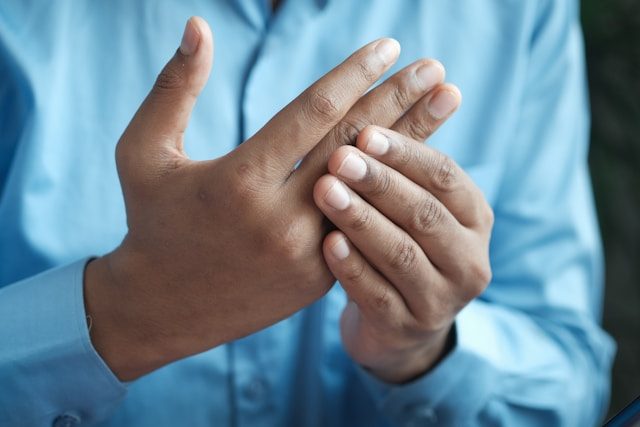
Image by Towfiqu barbhuiya is licensed with Unsplash License
Attentive home care can help individuals manage hand pain better than they might on their own. As a caregiver, you can help your patient balance rest and activity. You can also encourage gentle exercises and movements to help retain mobility while offering frequent rest breaks for recovery. Several interventions may ease discomfort during these breaks.
As a caregiver, you can also take over some of the household tasks that may aggravate hand pain. Assistance with dishes, light housekeeping, and laundry can provide great relief for those with chronic hand pain. Your regular presence in the home offers emotional and psychological support as well. This is important when someone is dealing with the ongoing challenge of persistent pain.
Immediate Pain Relief Techniques You Can Assist With
When hand pain is severe, it’s important to have a toolkit of fast-acting strategies to relieve this discomfort. Speak with your doctor about the best pain medications for you. For severe pain, you might get corticosteroid injections from your healthcare provider. NSAIDs like Advil and Motrin are common choices for treating inflammation at home.
Heat is a quick and easy way to ease stiffness in the hands. A warm bath, hot shower, or warm compress can help with arthritis and other types of joint stiffness. Some types of inflammation respond better to cold than heat. You may want to ice your hands if you’re suffering from tendon disorders or arthritis swelling. Your doctor can let you know whether heat or cold is best and when to use each.
Daily Activity Modifications and Adaptive Strategies
If you’re suffering from hand pain, it’s helpful to find adaptations that eliminate the need to hold or grasp items for long periods. Static holds, like grasping a computer mouse or holding a telephone for long periods, can worsen hand pain. Encourage the use of different hands, fingers, and positions. Guiding the mouse with one finger, then switching to another, may ease stiffness. A headset or speakerphone can eliminate the need to hold a phone.
It’s best to keep the hands and wrists aligned. Position the computer mouse and keyboard so the hands don’t need to bend at an awkward angle. Proper posture at the desk can also help. Individuals should keep their backs straight and shoulders back.
Exercise and Movement Support
Gentle exercises support flexibility and range of motion in the hands. Guide your patient through a daily routine that keeps their hands supple. Consult a doctor when developing this routine to make sure it’s appropriate for the individual. Exercises that you may find helpful include:
- Knuckle bends: Begin with the hand extended flat. Bend the middle finger joints down while keeping the knuckles straight.
- Thumb bends: Straighten all your fingers and bend the thumb inward to touch the base of the pinky. Hold for a few seconds, then straighten.
- “O” shapes: Begin with a flat hand and bend the finger and thumb to make an O shape. Hold and release.
- Finger lifts: Place your hand flat on a table. Lift your fingers and thumb one at a time, holding for a few seconds before laying them back down.
- Fingertip touches: Start with all fingers straight and extended. Bend them one at a time to touch the thumb.
Assistive Devices and Home Modifications
There are many aids that make it easier to navigate daily tasks with hand pain. You can implement DIY strategies by wrapping handles to make them larger and easier to hold. A tactile product, like a rug liner or uneven strands of yarn, will add texture that further enhances grip. This works well for daily items like a toothbrush, hairbrush, broom, or eating utensils. Cushioning the grip with a soft wrap can dampen vibrations for items like a drill or electric toothbrush.
You can purchase a wide range of assistive devices that are already modified for those with hand pain. A cuff allows you to secure an item to your hand. You might purchase a cuff to wrap around a flashlight so you can strap it to your hand when you need it. A large pen grip can make writing easier. A grip wrench helps patients open jars and bottles with limited hand strength or mobility.
You can make the home easier to navigate with chronic hand pain by switching to installations that are easy to manipulate. A lever door handle is easier to use with hand pain than a round one. Handles are easier to use than knobs on cabinets and drawers.
Emotional and Psychological Support
A caregiver can provide social, emotional, and psychological support for someone with chronic pain. Pain often makes people retreat from their daily activities. They may no longer feel like getting dressed and going out. While it’s tempting to retreat from the world when in pain, it’s not helpful. Social isolation and loneliness increase the risk of heart disease, stroke, depression, anxiety, dementia, and type 2 diabetes. A caregiver can encourage patients to stay active and involved. For those who still don’t go out, just having a caregiver in the house provides social interaction and support.
Contact The Hand and Wrist Institute
If you’re suffering from chronic hand pain, it’s important to work with a qualified specialist. At The Hand and Wrist Institute, we provide focused care for the hands and wrists. Contact us for a consultation to learn more about how to effectively manage and mitigate hand pain at home.

Dr. John Knight
Dr. Knight is a renowned hand, wrist and upper extremity surgeon with over 25 years of experience. Dr. Knight is a Board Certified Orthopedic Surgeon and Fellowship trained. Dr Knight has appeared on CNN, The Doctors TV, Good Morning America, The Wall Street Journal, The Washington Post, Forbes, The Huffington Post, Entrepreneur, Oxygen network and more.
Schedule Appointment

Meet the Doctor


Where Does it Hurt?®
Not sure what service you need or what injury or syndrome you may have? Use our free, interactive tool to help you understand more about what you are experiencing. Start by clicking on the image below.
Virtual Consultation
Located out of the area? Dr. Knight may be able to help you virtually with an online virtual consultation.

Real Patient Reviews


“I don’t often write reviews for Doctors offices..But this office is really exceptional in terms of service and my wrist is now great! Which is really the most important thing.”
Featured On